

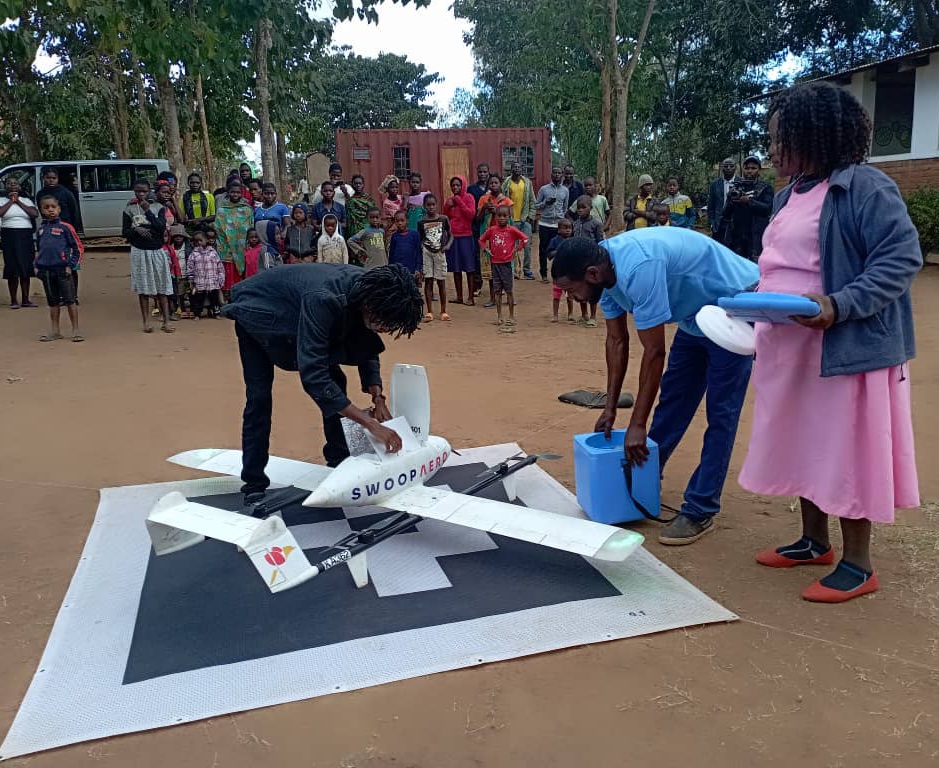
Health Policy Watch :On a partly cloudy morning last week, staff and onlookers watched with excitement and curiosity as a drone carrying polio vaccine doses was launched from the Matawale Health Centre in Zomba in eastern Malawi.
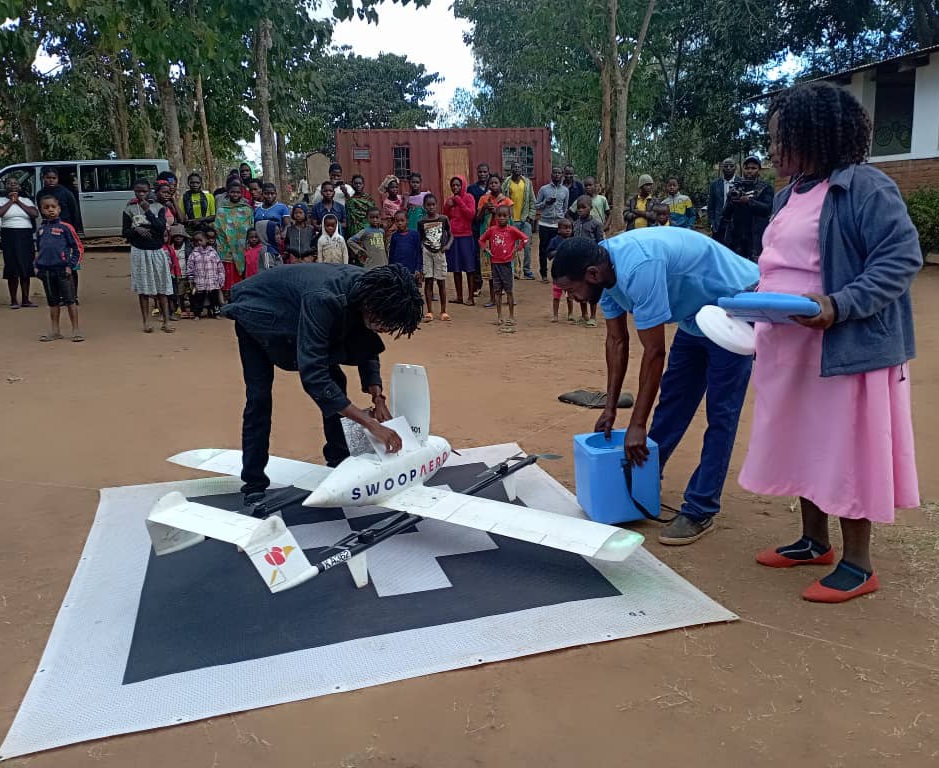
The drone was being sent to Chisi Island, one of the hard-to-reach parts of this district that is often left out of health initiatives due to its difficult geographical terrain.
But after wild poliovirus was detected in a young girl in Malawi’s capital, Lilongwe, in March 2022 and three further cases of vaccine-derived poliovirus were detected last year, the country started a supplementary campaign against polio.
Currently, 17 suspected cases of polio are awaiting diagnosis after specimens were sent to a laboratory in South Africa and health authorities are racing to vaccinate some 8.8 million children from birth to the age of 15 years with its immunisation drive.
The use of drones to deliver vaccines to Chisi Island and other hard-to-reach areas has seen an increase in immunisation coverage. It also offers hope to parts of the country where health infrastructure and roads have been damaged due to the recent Tropical Cyclone Freddy.
From bad roads and boats to mere minutes
Ordinarily, staff from the Zomba District Health Office (DHO) would drive 50 kilometres to Kachulu Beach with medical supplies including vaccines. At the beach, the supplies would be transported by a motor boat for 30 minutes before finally reaching the Island. Fuel for the boat alone costs K120,000 (about $126) f.
“This was costly and time-consuming for our office. Transporting commodities has been a matter of a few minutes using the drone,” says Zomba DHO spokesperson, Arnold Mndalira.
Before the fifth mass polio vaccination campaign, which ran from 12-15 July, the Zomba district office used a drone for the first time to transport COVID-19 vaccines, blood samples and specimen results, Mndalira explains
“The drone has a 3.5kg carrying capacity. Plus the advantage with this is that it can go several times within a short time,” Mndalira told Health Policy Watch.
The drones are supplied and managed by Swoop AERO, a global medical drone logistics networking company.
The Malawi government and UNICEF launched an air corridor to test the potential humanitarian use of drones (also known as unmanned aerial vehicles) in 2017.
This corridor is the first in Africa and one of the first globally with a focus on humanitarian and development use, according to UNICEF.
Swoop AERO now delivers essential medical commodities to 60 remote facilities across six districts in Malawi.
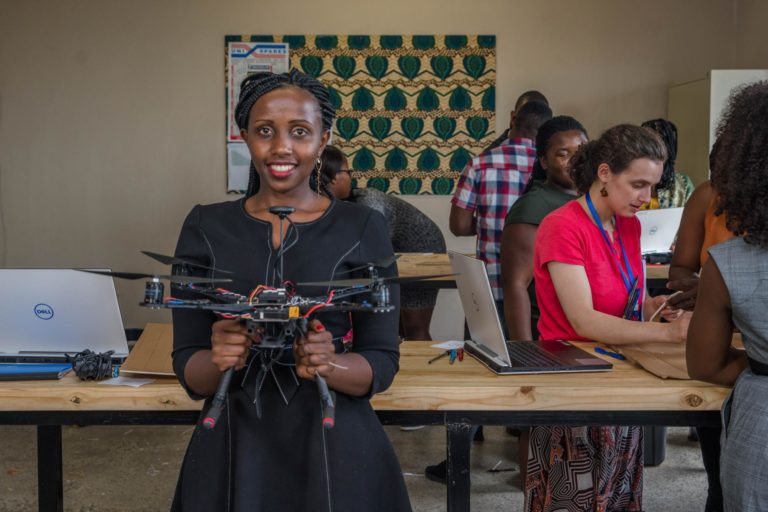
“It’s so satisfying to deliver life-saving commodities such as vaccines using drones. It feels good to be part of making a difference in people’s lives,” says Anne Nderitu, Operations Manager for Swoop AERO.
Health facility workers have been trained to receive the drone for the mass polio vaccination campaign and other medical commodities. By 14 July – day three of the campaign – the drones had already delivered 8,500 polio vaccine doses to hard-to-reach areas in Zomba, Chikwawa and Mangochi districts. The drone can carry 2,000 doses in one trip.
“We are targeting to reach 24 districts with this technology in the coming months. It’s imperative to extend these services to a wider Malawian public health space,” Nderitu says.


