

Press – Latin America’s agricultural landscape is undergoing a profound transformation as drone technology rapidly emerges as a game-changing solution for crop protection and farm management. From the vast soybean fields of Brazil to the coffee plantations of Colombia and the agave farms of Mexico, agricultural drones are addressing critical challenges that have long plagued the region: labor shortages, complex terrain, fragmented land ownership, and the urgent need for sustainable farming practices.
To understand this remarkable shift, we conducted in-depth interviews with four key industry leaders who are shaping the future of agricultural aviation across Latin America. Yefei Dong, Sales Representative for DJI Agriculture Latin America, provided insights into how the world’s leading drone manufacturer has built a comprehensive network spanning from Mexico to Argentina, training thousands of operators and establishing over 200 service centers. Qichang Cheng, Regional Manager at XAG Latin America, shared perspectives on precision agriculture solutions and strategic partnerships with established agricultural giants like CNH Industrial.
DJI Agriculture introduced the Agras T20 to the Mexican market in 2019. This was the company’s first foray into Latin America, where the demand for agricultural drones has grown significantly in the last six years.
Additionally, DJI Agriculture has expanded its presence to Brazil, Mexico, as well as major Latin American countries, including Chile, Argentina, Colombia, Ecuador, Peru, Bolivia, Uruguay, and Paraguay.
The Latin America market is one of DJI Agriculture’s important markets. The region encompasses a variety of climates, ranging from tropical to temperate, has vast areas under cultivation, and agriculture is one of the important sources of income for many of these countries. However, in many Latin American countries land ownership structures are highly fragmented, especially among smallholder and family farms. With lower levels of management and mechanization, this fragmentation hinders the development of economies of scale. Complex terrains, along with a decreasing rural workforce and rising labor costs, necessitates more advanced agricultural equipment to address these issues.
What is XAG’s development plan for the agricultural drone crop protection market in Latin America over the next 5–10 years?
XAG plans to expand both its channel network and after-sales service capabilities. On one hand, we aim to deepen our presence in existing markets and actively explore other potential markets in Latin America, establishing more smart farm demonstration cases. On the other hand, we will continue to improve the local distributor network, enhancing service quality and responsiveness to better address local issues, ensuring timely technological optimization and service support.
In addition to agricultural drones, XAG has also developed a range of products, including unmanned ground vehicles, autopilot systems, and smart irrigation solutions, aiming to create more comprehensive smart farm solutions. We hope that our agricultural technology can cross regional boundaries, benefiting farmers worldwide and contributing to more efficient and sustainable agricultural development globally.
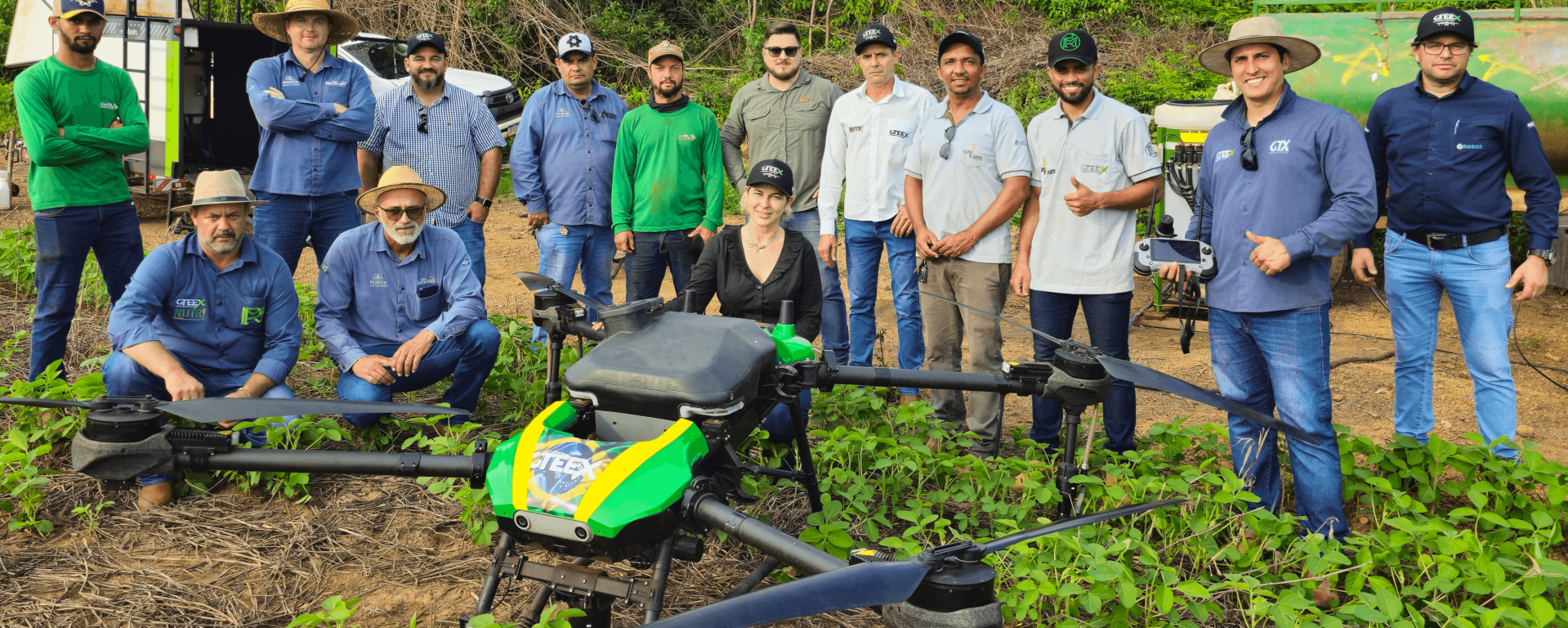
GTEEX’s Research and Development (R&D) capabilities are driven by detailed market analysis and the flexibility of its in-house engineering. The company carefully studies the market to identify the “bottlenecks” of competitors. By having its own engineering team, GTEEX can more dynamically and quickly adapt its drones to customer needs and Brazilian policies and legislation, ensuring greater safety for its users.
GTEEX’s technological development focuses on application precision, employing scientific knowledge to position the materials on the target safely and economically. To achieve this, the company uses technologies such as atomizing discs that, in conjunction with top-of-the-line software, ensure safety and reduce drift during spraying. A strategic differentiator of its R&D is the manufacture of domestic parts, resulting in faster production and component replacement, eliminating the long waits associated with maritime transportation and customs clearance.
Institutions like the Brazilian Agricultural Research Corporation (EMBRAPA, linked to the Brazilian Ministry of Agriculture), are key to building specialized centers and developing new farm tech with universities and industry. On top of that, government support through subsidized credit, innovation funds, and green markets could give local startups the push they need to compete globally.
Featured image©GTEEX


