

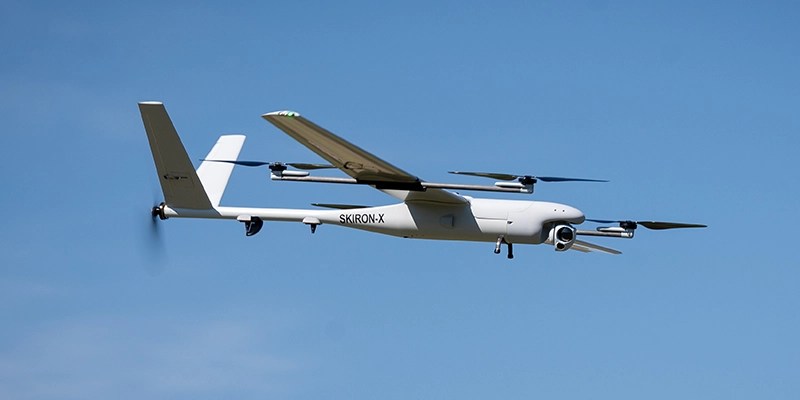
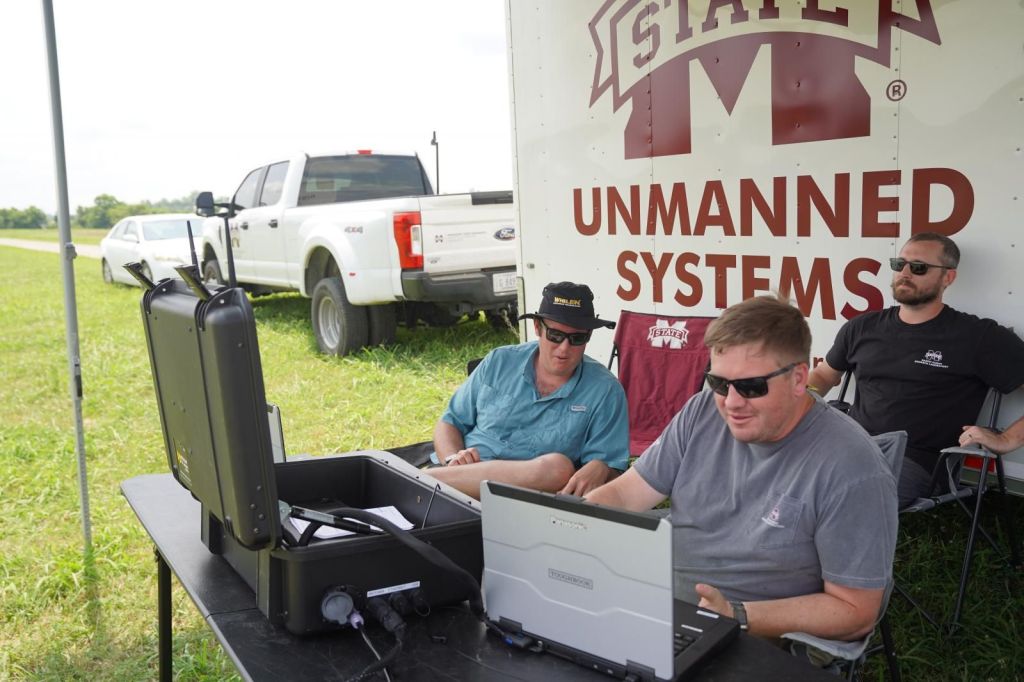
Mississippi State University’s Raspet Flight Research Laboratory is working on a groundbreaking project aimed at advancing unmanned aircraft systems (UAS) for emergency response operations beyond the visual line of sight (BVLOS). Aurora Flight Sciences, a Boeing company, provided their Group 2 UAS, SKIRON-X, to serve as a test platform throughout the project.
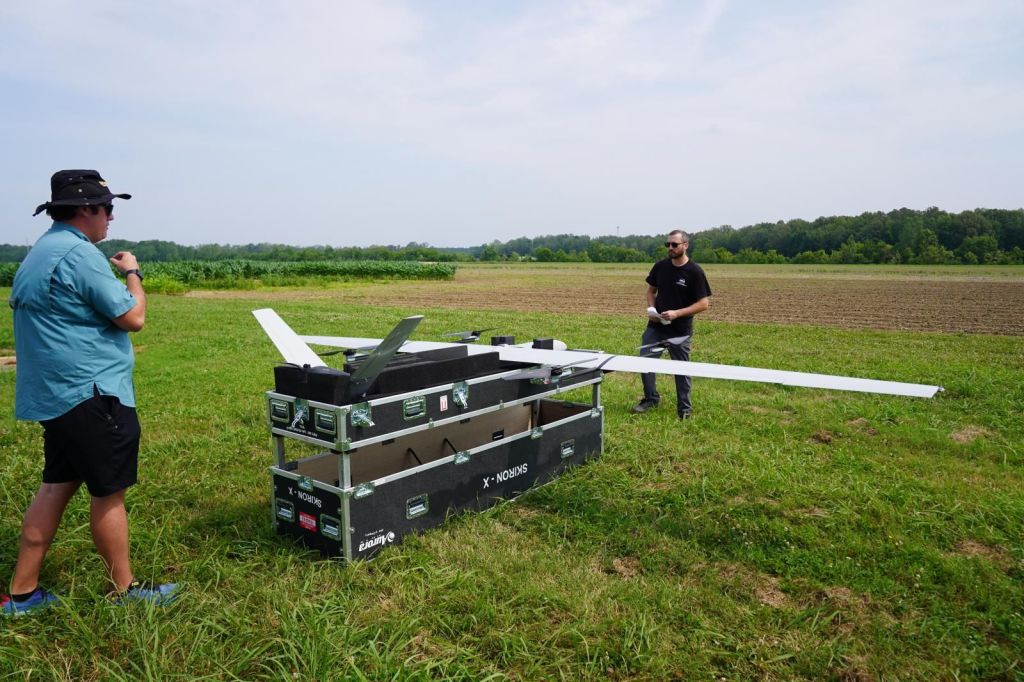
SKIRON-X combines the convenience of vertical take-off and landing with the longer endurance of fixed-wing flight. In its standard battery-powered configuration, it has a flight time of up to 3.5 hours. Over the past few months, Raspet researchers have flown SKIRON-X for more than 30 flight hours, providing extensive flight logs and pilot feedback to help refine the platform for first responders and BVLOS operations.
“Working with MSU’s Raspet Flight Research Laboratory has been invaluable,” said Jason Grzywna, senior director of products at Aurora. “Training the team to operate SKIRON-X was easy and they quickly became expert users. Their work toward BVLOS operations with SKIRON-X will optimize the user experience for future customers.”
The goal of the MSU project is to support first responders by developing a process manual to help them navigate the Federal Aviation Administration’s (FAA) BVLOS waiver process. Extending UAS operations beyond the visual line of sight of the flight crew can significantly increase the effectiveness of drones during time-critical missions such as search and rescue. Raspet is demonstrating how UAS like SKIRON-X can safely and efficiently conduct BVLOS operations.


